Somewhere there are miles of materials no one will ever wear. Silks, wools, leathers ordered by the greatest houses, made in excess, then put away. They sleep in warehouses, perfect and useless, out of the light.
Summer 2027·Aparthés·Behind the scenes
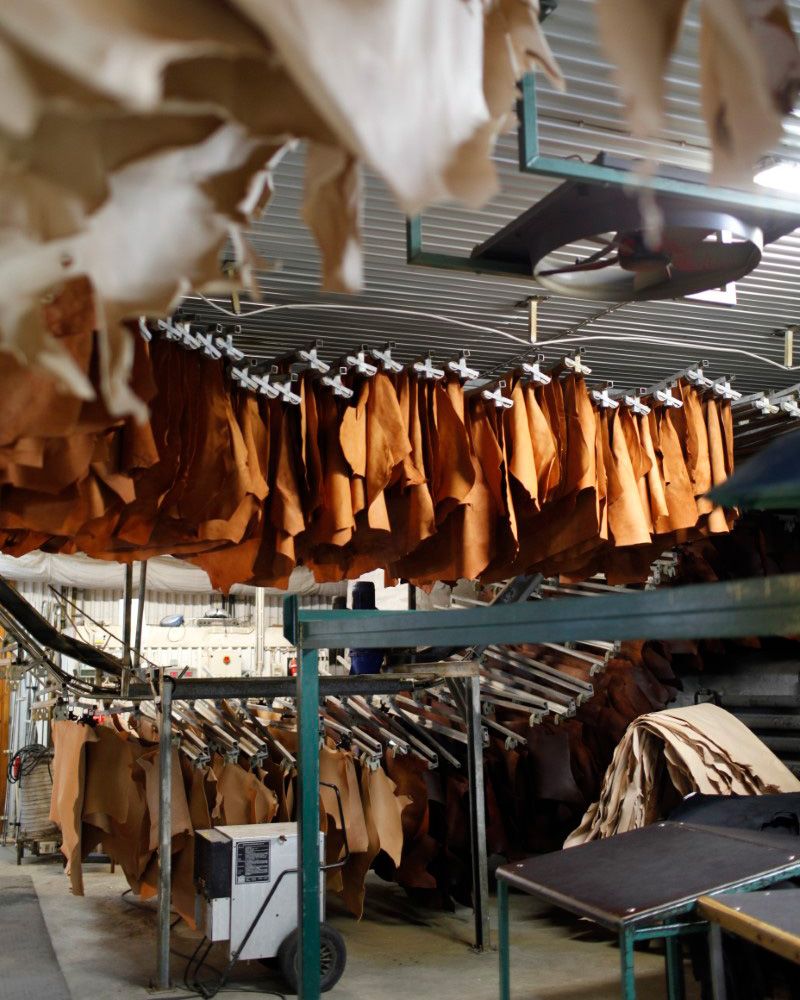
A great house orders its material seasons ahead, and in quantity. Then the collection changes, a colour falls out of favour, a volume is revised down. What remains is the material: too beautiful to destroy, too dated for the next window. It is called dormant stock, and it builds up in amounts no one imagines; millions of metres of cloth, thousands of square metres of leather.
We go and find it. These are the same rolls as those sewn into the pieces you admire on the finest avenues; out of the same tanneries, the same spinning mills, through the same controls. Nothing second-rate. First-rate surplus. The only thing that separates our leather from theirs is that it nearly never got used.
“The material was there. It only lacked a house to wake it.”
Some will call it recycling. It isn’t. Recycling grinds and transforms; we take the material intact, in its first life, simply a season out of step. A full-grain hide that has never been cut, a silk that has never been unrolled. We treat it for what it is: the very best there is, full stop.
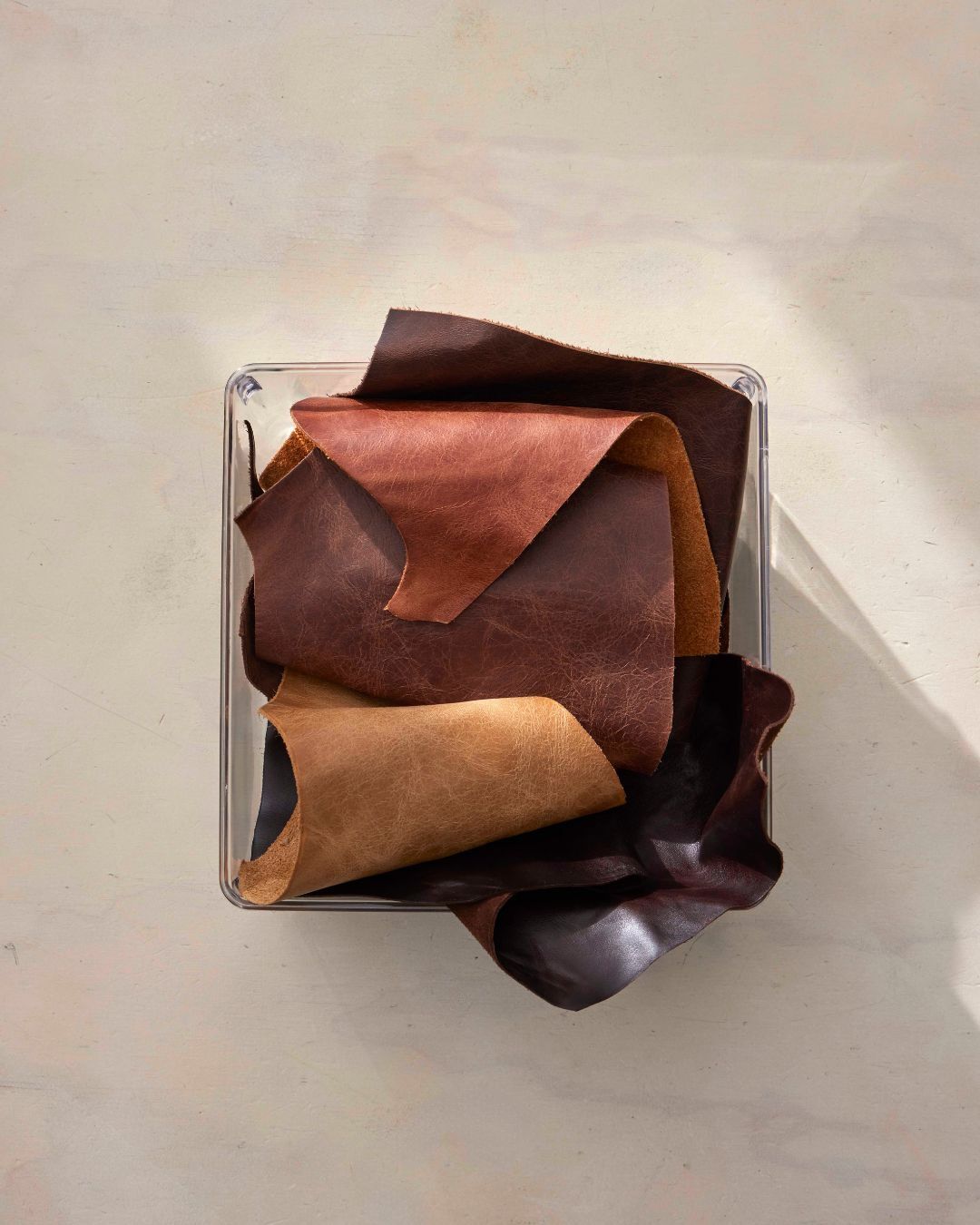
This way of working has its rules. You don’t order what you want; you take what exists. A few hides in one colour, a single roll of a silk, and nothing more. That is why our pieces are clean and counted: once a material is gone, we move to the next. It isn’t a constraint we endure, it’s a playing field we chose.
And it isn’t a matter of a single collection. We will come back to it, season after season; some of our pieces will be born in quantity from these dormant stocks, so that we never stop putting them back into play.
For you, all of this comes down to a single sentence: the material of your piece is of the highest luxury, because that is where it comes from. We can’t always tell you from which house; we don’t know ourselves. What matters is what the material is, not the name it bore before it fell asleep.
A great house orders its material seasons ahead, and in quantity. Then the collection changes, a colour falls out of favour, a volume is revised down. What remains is the material: too beautiful to destroy, too dated for the next window. It is called dormant stock, and it builds up in amounts no one imagines; millions of metres of cloth, thousands of square metres of leather.
Swipe
This way of working has its rules. You don’t order what you want; you take what exists. A few hides in one colour, a single roll of a silk, and nothing more. That is why our pieces are clean and counted: once a material is gone, we move to the next. It isn’t a constraint we endure, it’s a playing field we chose.
We go and find it. These are the same rolls as those sewn into the pieces you admire on the finest avenues; out of the same tanneries, the same spinning mills, through the same controls. Nothing second-rate. First-rate surplus. The only thing that separates our leather from theirs is that it nearly never got used.
“The material was there. It only lacked a house to wake it.”
Some will call it recycling. It isn’t. Recycling grinds and transforms; we take the material intact, in its first life, simply a season out of step. A full-grain hide that has never been cut, a silk that has never been unrolled. We treat it for what it is: the very best there is, full stop.
And it isn’t a matter of a single collection. We will come back to it, season after season; some of our pieces will be born in quantity from these dormant stocks, so that we never stop putting them back into play.
For you, all of this comes down to a single sentence: the material of your piece is of the highest luxury, because that is where it comes from. We can’t always tell you from which house; we don’t know ourselves. What matters is what the material is, not the name it bore before it fell asleep.
Stay close
Miss nothing of what’s coming.
Sign up to see the first pieces before anyone else: the prototypes are unveiled by the end of 2026, Chapter 0 opens in summer 2027.