All leathers carry the same name and don’t tell the same story. Between a full grain and a bonded leather lies the gap between a cloth and its imitation.
Summer 2027·Aparthés·The material
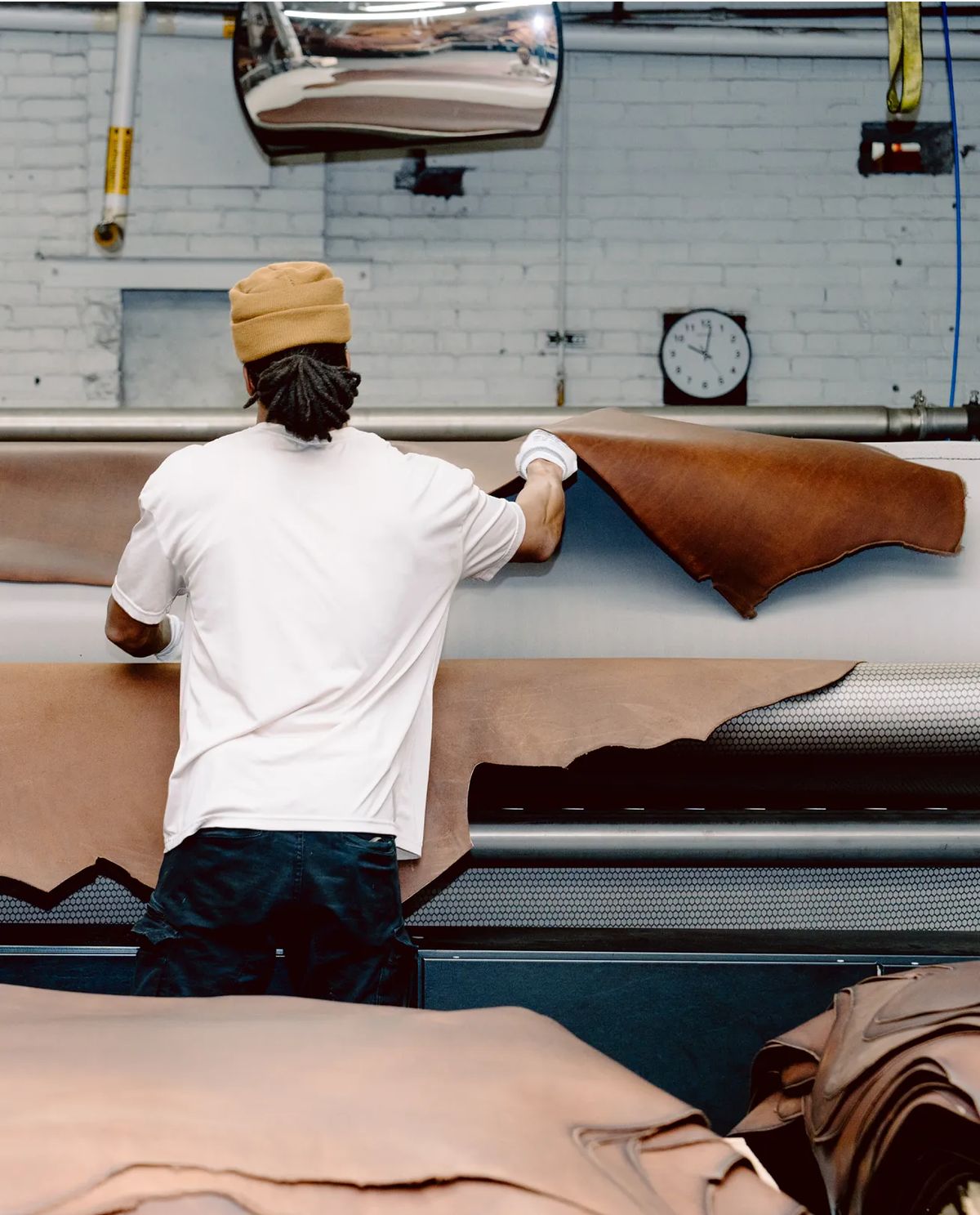
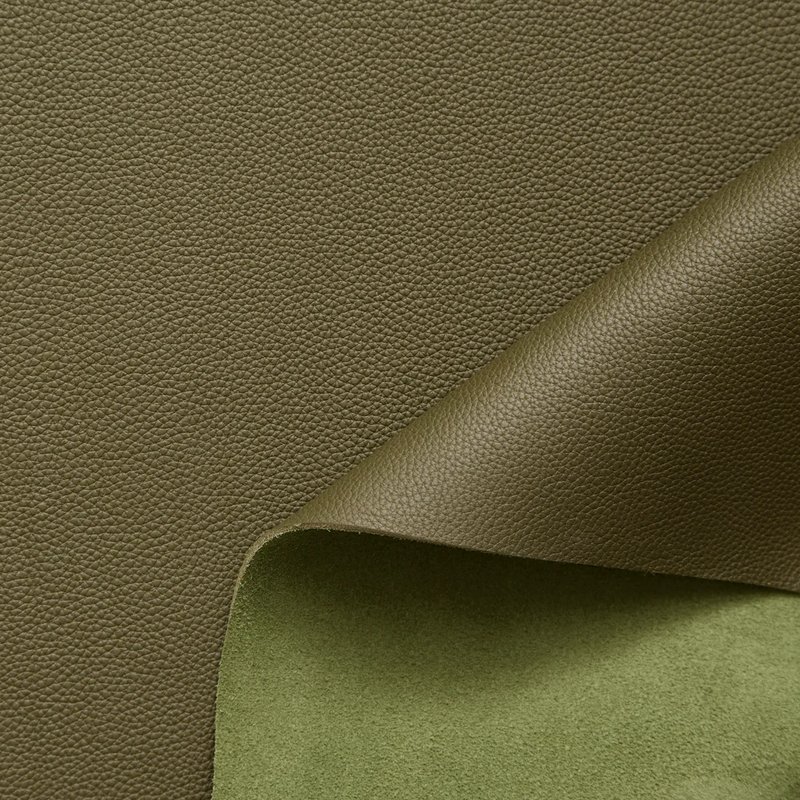
A leather is read before it is touched. In the light, a full grain keeps the animal’s grain: its folds, its veins, sometimes a scar left in place. Nothing has been sanded down to look tidy.
Our pieces are born mostly in lamb and calf, always full grain: the top layer of the hide, dense, honest, alive. It darkens as it ages, softens where it is touched, gains a lustre no finish can imitate. A new piece is beautiful; the same one, three years on, is better. That is all we ask of a fine leather: that it improve instead of tire.
Lamb and calf make up most of our pieces: lamb for what sits close to the body and its suppleness, calf for its fine grain and its hold. Cowhide comes in support, for what needs more body. Each hide in its place.
“The whole difference lies in the layer we chose to keep.”
Smooth perfection was long a selling point: an identical grain from end to end, no surprise, no accident. But a perfect grain is a dead grain; it doesn’t move because there is nothing alive left to move. We prefer the other beauty, the one that carries the marks of the animal and of time.
Spotting a true full grain takes three gestures. The grain, first: irregular, never repeated the same. The hand next: a full grain is warm, a little oily, it answers when you press it. The smell last: leather smells of leather, synthetic smells of plastic. Three seconds, and the doubt is gone.
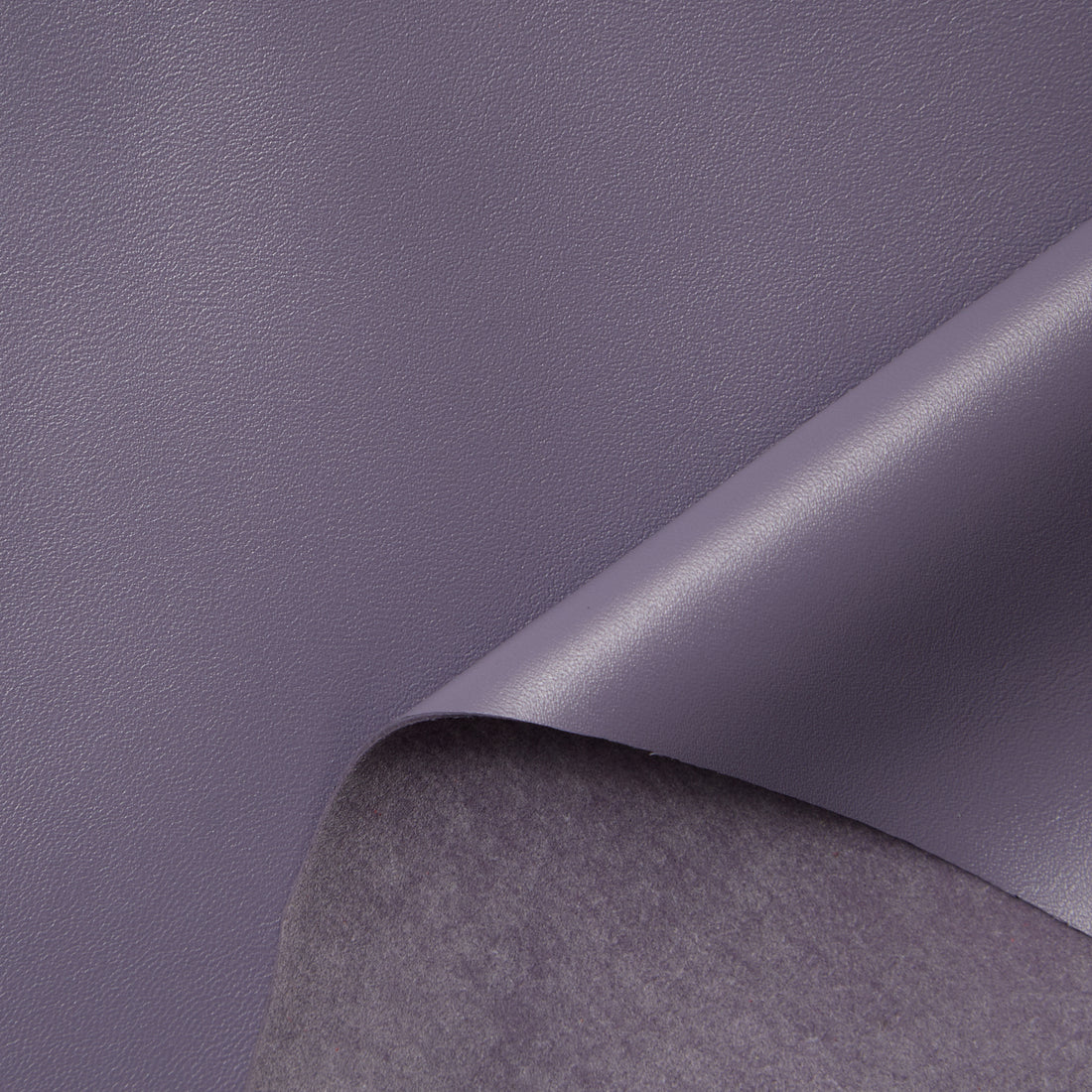
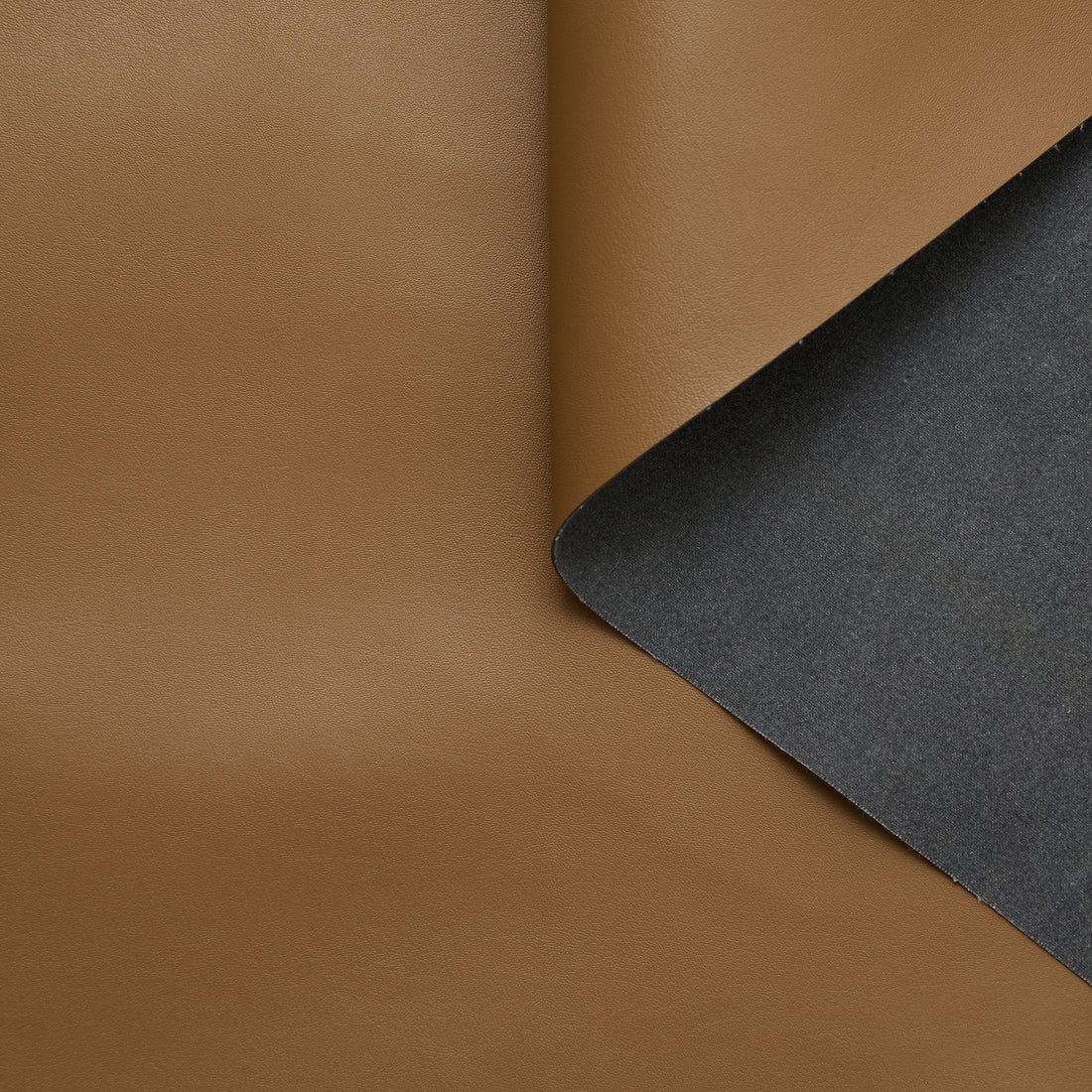
Beneath it lies everything the market calls “leather” without it being the same word. Split leather, the bottom layer with no grain, covered in a film that mimics the grain. Corrected leather, sanded then reprinted with a neat fake grain. Bonded leather, made of ground-up offcuts glued together, sold as “genuine leather” when it only has the scraps of it. They all exist, all cost less, and all share the same flaw: they don’t age, they crack.
A fine leather doesn’t lie. It tells where the hide comes from, how it was treated, how much time it was given. The full grain we choose is not trying to stay new: it darkens, it softens where the hand passes, it gains over the years what no finish can manufacture. We could have gone cheaper; no one would have seen the difference on day one. But a piece that crosses the decades with its glow intact is not up for negotiation.
A leather is read before it is touched. In the light, a full grain keeps the animal’s grain: its folds, its veins, sometimes a scar left in place. Nothing has been sanded down to look tidy.
Swipe
Our pieces are born mostly in lamb and calf, always full grain: the top layer of the hide, dense, honest, alive. It darkens as it ages, softens where it is touched, gains a lustre no finish can imitate. A new piece is beautiful; the same one, three years on, is better. That is all we ask of a fine leather: that it improve instead of tire.
Lamb and calf make up most of our pieces: lamb for what sits close to the body and its suppleness, calf for its fine grain and its hold. Cowhide comes in support, for what needs more body. Each hide in its place.
“The whole difference lies in the layer we chose to keep.”
Smooth perfection was long a selling point: an identical grain from end to end, no surprise, no accident. But a perfect grain is a dead grain; it doesn’t move because there is nothing alive left to move. We prefer the other beauty, the one that carries the marks of the animal and of time.
Spotting a true full grain takes three gestures. The grain, first: irregular, never repeated the same. The hand next: a full grain is warm, a little oily, it answers when you press it. The smell last: leather smells of leather, synthetic smells of plastic. Three seconds, and the doubt is gone.
Swipe
Beneath it lies everything the market calls “leather” without it being the same word. Split leather, the bottom layer with no grain, covered in a film that mimics the grain. Corrected leather, sanded then reprinted with a neat fake grain. Bonded leather, made of ground-up offcuts glued together, sold as “genuine leather” when it only has the scraps of it. They all exist, all cost less, and all share the same flaw: they don’t age, they crack.
A fine leather doesn’t lie. It tells where the hide comes from, how it was treated, how much time it was given. The full grain we choose is not trying to stay new: it darkens, it softens where the hand passes, it gains over the years what no finish can manufacture. We could have gone cheaper; no one would have seen the difference on day one. But a piece that crosses the decades with its glow intact is not up for negotiation.
Stay close
Miss nothing of what’s coming.
Sign up to see the first pieces before anyone else: the prototypes are unveiled by the end of 2026, Chapter 0 opens in summer 2027.