The manifesto of the house. What we put into a piece, what we refuse to put in, and why it shows.
Summer 2027·Aparthés·Paris
Why write a manifesto before the house even opens? Because it all comes down to a single question, and it’s better asked early: what is this really made of?
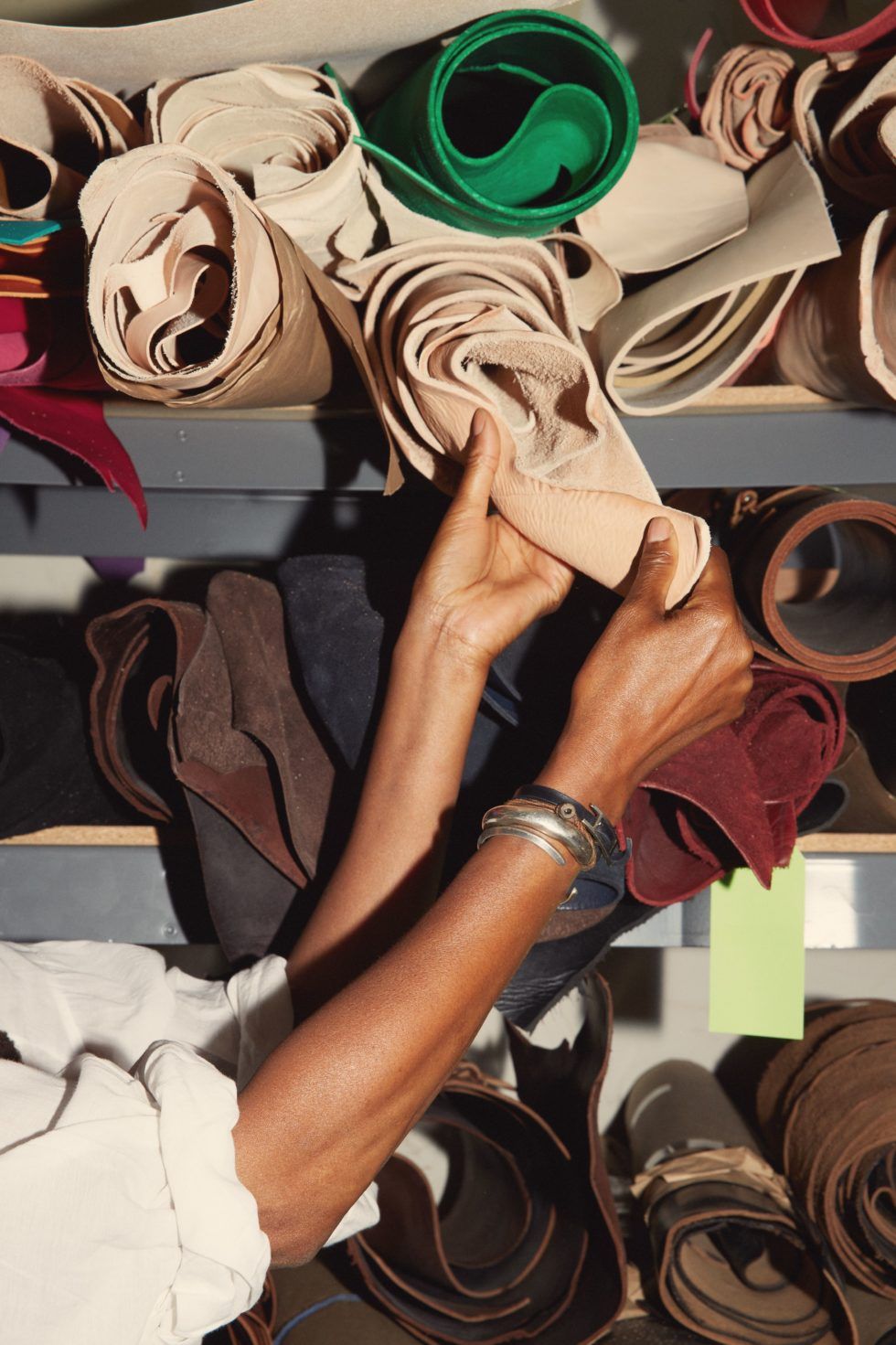
A piece is not a silhouette. It is first a material; a fibre, a hide, a thread. Before the sketch, before the cut, before the name, everything is decided there. It is our first decision, and the only one that is never made twice.
What we use comes down to a few words: wool, cashmere, cotton, silk, full-grain leather. Real materials that breathe, age, and end up resembling the one who wears them. No synthetic blend gets in. The fake mimics the look, never the behaviour; it starts new, stiff, and stays that way until it cracks. That is all that separates us from it.
“What it’s made of shows, is felt, is known.”
The real thing costs more to buy and less to live with. A well-made piece lasts for years without betraying itself. That discipline has a price; we own it, and we don’t disguise it.
We work with two hands. On one side, limited runs cut from the dormant stocks of the greatest houses: first-rate leathers, silks and wools, ordered then set aside, which we go and find and put back into play. There, the material is counted; once it’s gone, the piece stops. On the other, a wardrobe in series, accessible, made to be worn and renewed. The rare kind of beauty on one side, the everyday kind on the other; never the mediocre.
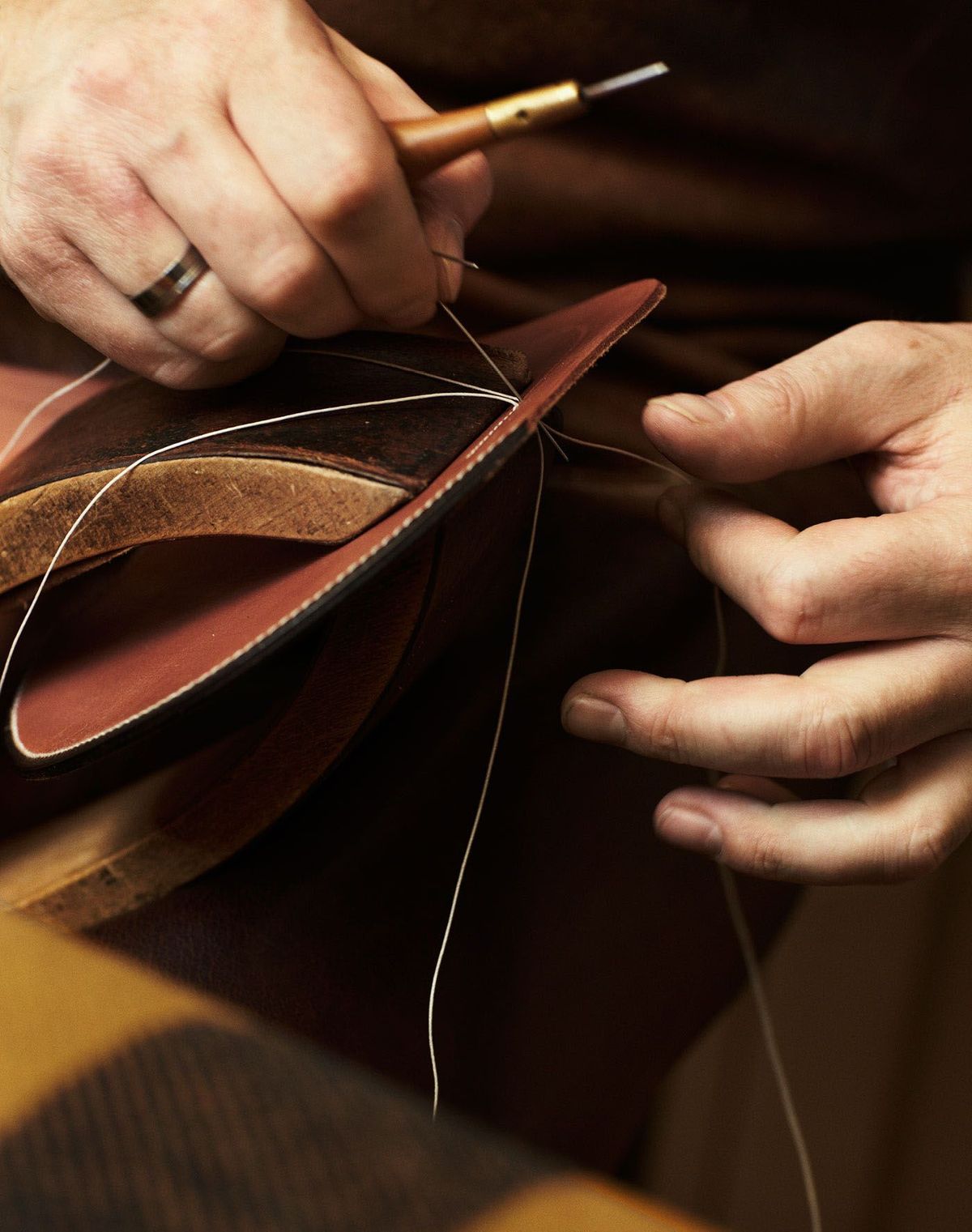
Accessible does not mean rushed. It took us more than a year to settle a single card holder: its material, its hold, its finish under the thumb. A waistcoat, a pair of trousers, a bag demand the same stubbornness; we come back to them season after season, until we hold the cut we were after. Some pieces will be openly worked, others will stay plain; their making, never.
And always, the truth of the material. We say what every piece is made of, with no half-truths and no vague percentages: a piece that is 100 % wool is marked 100 % wool; if a technical thread holds the shape, we name it. On the right side as on the reverse.
This question, we ask it of every piece. What is it really made of? We ask it of you too.
Why write a manifesto before the house even opens? Because it all comes down to a single question, and it’s better asked early: what is this really made of?
Swipe
A piece is not a silhouette. It is first a material; a fibre, a hide, a thread. Before the sketch, before the cut, before the name, everything is decided there. It is our first decision, and the only one that is never made twice.
What we use comes down to a few words: wool, cashmere, cotton, silk, full-grain leather. Real materials that breathe, age, and end up resembling the one who wears them. No synthetic blend gets in. The fake mimics the look, never the behaviour; it starts new, stiff, and stays that way until it cracks. That is all that separates us from it.
“What it’s made of shows, is felt, is known.”
The real thing costs more to buy and less to live with. A well-made piece lasts for years without betraying itself. That discipline has a price; we own it, and we don’t disguise it.
We work with two hands. On one side, limited runs cut from the dormant stocks of the greatest houses: first-rate leathers, silks and wools, ordered then set aside, which we go and find and put back into play. There, the material is counted; once it’s gone, the piece stops. On the other, a wardrobe in series, accessible, made to be worn and renewed. The rare kind of beauty on one side, the everyday kind on the other; never the mediocre.
Accessible does not mean rushed. It took us more than a year to settle a single card holder: its material, its hold, its finish under the thumb. A waistcoat, a pair of trousers, a bag demand the same stubbornness; we come back to them season after season, until we hold the cut we were after. Some pieces will be openly worked, others will stay plain; their making, never.
And always, the truth of the material. We say what every piece is made of, with no half-truths and no vague percentages: a piece that is 100 % wool is marked 100 % wool; if a technical thread holds the shape, we name it. On the right side as on the reverse.
This question, we ask it of every piece. What is it really made of? We ask it of you too.
Stay close
Miss nothing of what’s coming.
Sign up to see the first pieces before anyone else: the prototypes are unveiled by the end of 2026, Chapter 0 opens in summer 2027.